You are the resuscitation consultant in a paediatric major trauma centre. A 12-year-old girl is brought in by her parents after crashing while landing from a jump on a motorbike and hitting the handlebars with her chest. She is complaining of severe pain and shortness of breath. Observations on arrival are HR 139 bpm, BP 90/42 mmHg, RR 36 bpm, sats 94% on 15 L NRB, GCS 15.
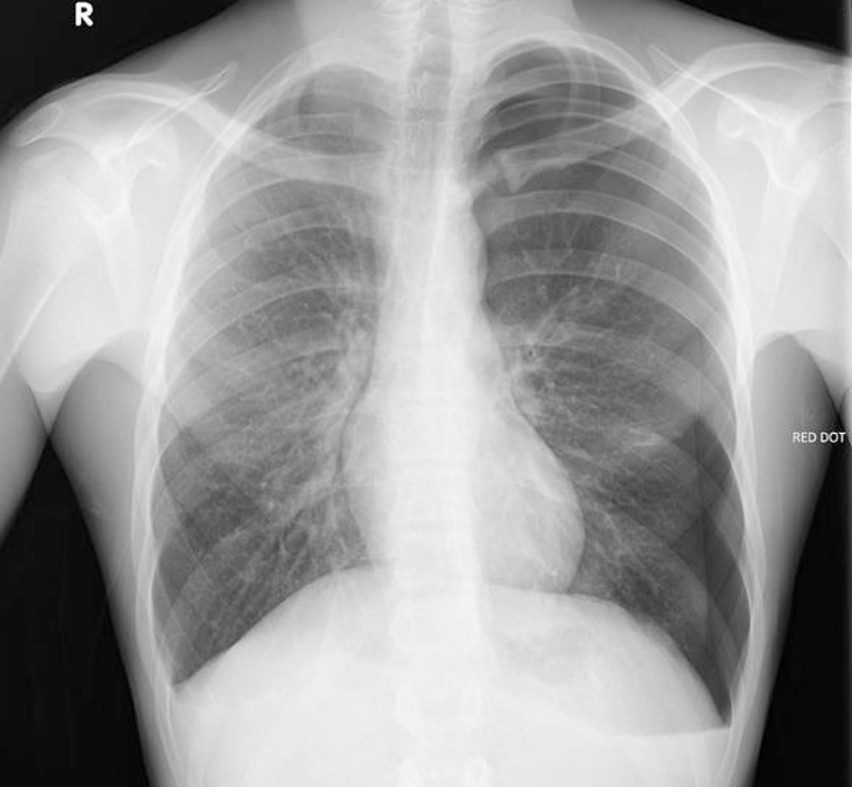
Paediatric blunt chest trauma

1. List (3) important radiological features on the CXR. 3 marks

β˜… β˜… β˜… β˜… β˜…

She continues to complain of left lower chest pain and has some tenderness when palpating her pelvis. Her haemodynamics are unchanged. Your team wishes to apply a pelvic binder, but the pelvic immobilisation device is too large.

2. State (2) options to stabilise the pelvis. 2 marks

β˜… β˜… β˜… β˜… β˜…

The pelvis is now immobilised.

3. State (5) resuscitation priorities, with a focus on management of circulation. 5 marks

β˜… β˜… β˜… β˜… β˜…

You decide that an ICC needs to be placed.

4. Complete the table below regarding ICC insertion in this scenario. 3 marks

β˜… β˜… β˜… β˜… β˜…

5. List (2) features stating how utility of eFAST POCUS is different to adult care 2 marks

β˜… β˜… β˜… β˜… β˜…

During the resuscitation, her parents request to stay to support her. Your department tries to adhere to the β€˜family presence in resuscitation’ principle.

6. List (3) requirements to optimise parental presence in the resuscitation room. 3 marks

β˜… β˜… β˜… β˜… β˜